
Diamonds For Exporters — Certified Natural & CVD Diamond Supply from Surat
Exporting diamonds is not a trading activity. It is a system-driven business requiring margin control, compliance precision, and consistent diamond sourcing discipline. We supply GIA and IGI certified diamonds specifically structured for international wholesale and export markets.
Zahra Diamonds · Surat, Gujarat, India · Supplying US, UK, UAE & global export markets
Looking for structured sourcing of Diamonds For Exporters for global trade? Start here.
Early consultation prevents misaligned purchasing and protects your export margins from day one. We assess your target market, certification needs, and volume capacity before recommending any procurement structure.
The Structural Reality of the Global Diamond Export Industry
The global polished diamond export market is a precision business. Many exporters struggle not because international demand is weak — but because their procurement systems lack discipline. Reactive buying, misaligned certifications, and poor parcel construction consistently erode margins that should have been protected at the sourcing stage.
We help diamond exporters move from reactive buying to structured sourcing — aligning inventory to actual market demand in their target geography, rather than available supply from traders.
The five core pressures facing diamonds for exporters today:
- Price volatility across Rapaport cycles
- Quality inconsistency between shipments
- Certification trust sensitivity in buyer markets
- Export documentation risk and customs delays
- Buyer expectation mismatch on grading accuracy

Surat: Direct Access to the World’s Diamond Polishing Ecosystem
Surat, Gujarat is responsible for cutting and polishing over 90% of the world’s diamonds. Every diamond sold globally — in New York, London, or Dubai — passes through Surat’s polishing factories at some point in its journey.
For exporters of diamonds, this geographic reality offers a structural advantage that no other sourcing location can replicate. Sourcing directly from within Surat’s manufacturing ecosystem — rather than through multiple layers of Mumbai or international traders — eliminates unnecessary intermediary costs and provides direct access to the freshest inventory at the tightest prices.
Zahra Diamonds operates within this ecosystem as a sourcing and supply partner — not as a retail trader marking up inventory from other wholesalers.
Diamond Categories Structured for Global Export Markets
We supply diamonds aligned with international demand patterns — not random inventory liquidation. Each category is sourced with a specific export buyer profile in mind, and each stone is evaluated for market fit, not just grading paper.
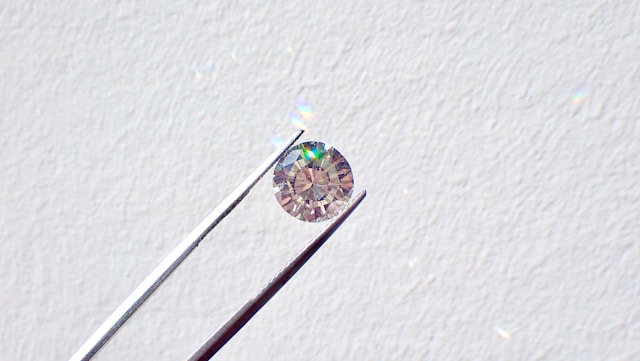
Natural Polished Diamonds
Suitable for: Jewelry manufacturers exporting finished goods, international wholesale distributors, investment-focused diamond resellers
Specifications:
- 0.18 ct to 5+ carats available
- Round brilliant & fancy shapes
- D–M color · IF–SI clarity
- GIA-certified + calibrated non-certified options

CVD Lab-Grown Diamonds
Export demand for lab-grown diamonds continues to grow across US and European retail segments. IGI-certified CVD diamonds offer strong margin potential for export businesses targeting value-conscious markets.
We supply:
- IGI-certified CVD diamonds
- DEF color & commercial color categories
- Ideal cut preference
- Volume-based parcel programs
Matched Export Parcels
Exporters supplying chain retailers and repeat international buyers require consistency across every shipment. Inconsistent parcel quality is one of the fastest ways to lose an overseas buyer relationship.
We offer:
- Size-matched layouts
- Color uniformity & clarity alignment
- Repeat-order supply programs
- Calibration precision for jewelry settings
Natural Diamonds vs Lab-Grown Diamonds for Export: Key Differences
Understanding which diamond type aligns with your target export market is fundamental to a profitable sourcing decision. The right choice depends on your geography, buyer profile, and margin expectations.
| Factor | Natural Polished Diamonds | CVD Lab-Grown Diamonds |
|---|---|---|
| Certification | GIA (primary) / IGI | IGI (standard) |
| Price Point | Higher — investment-grade positioning | Lower — volume & retail accessibility |
| Market Demand | UAE, luxury US, UK | Mass US retail, EU growth |
| Resale Liquidity | Higher long-term | Lower — declining cost curve |
| Origin Compliance | Kimberley Process required | No KP requirement |
| Best For Exporters | Investment resellers, luxury wholesale | Retail jewelry manufacturers, volume trade |
| Visual Performance | Varies — cut quality critical | Consistent when cut grade is maintained |
| Disclosure Required | Yes — natural origin | Yes — lab-grown origin mandatory |
Certification & Diamond Grading Standards for Export Markets
A diamond certificate is not just a quality document — in export trade, it is a trust instrument. Buyers in different markets place different levels of trust in different grading laboratories, and mismatched certification can slow or kill a sale even when the diamond is excellent.
We work primarily with internationally recognized grading laboratories:
Market certification preferences:
Beyond certificates, our internal evaluation covers: cut symmetry consistency, polish grade accuracy, fluorescence impact on market price, inclusion positioning visibility, and overall market alignment.

Export Documentation & Diamond Compliance Framework
Diamond exporting requires strict compliance discipline at every stage of the logistics chain. Errors in documentation — wrong HS codes, missing Kimberley certificates, or incomplete packing lists — can cause shipments to be held at customs, damaging buyer relationships and exporter reputation.
We assist with comprehensive diamond export documentation and compliance support:
Our 5-Step Structured Diamond Export Supply Process
Unlike transactional diamond traders, we operate a structured procurement process designed to protect exporter margins at every stage — from initial market assessment through final shipment execution.
Market Alignment Assessment
We evaluate your target geography, buyer segment type, certification requirement, monthly inventory rotation capacity, margin expectation, and holding capital. This prevents overstocking in slow-moving categories and misaligned purchasing that destroys margins before export even begins.
Strategic Diamond Sourcing
We focus on fast-moving size categories, stable price brackets, cut grades that visually perform above their certificate grade, and stones with strong international resale liquidity. We proactively advise exporters when market timing is unfavorable — a significant value-add over transactional suppliers who sell regardless of cycle position.
Multi-Layer Quality Screening
Each order undergoes certificate verification, clarity review under 10× magnification, fluorescence impact evaluation, symmetry and polish cross-check, and inclusion mapping. This rigorous screening process minimises post-shipment buyer disputes and return requests — the most margin-damaging events in diamond export trade.
Transparent Pricing Logic
All pricing is benchmarked against current Rapaport global standards, with monitoring of demand cycles, correction-phase evaluation, and volume-based negotiation where applicable. We prioritize sustainable margin structure over speculative buying — protecting your long-term export profitability over short-term volume.
Secure International Logistics Execution
We coordinate tamper-proof packaging, fully insured international diamond shipping, courier compliance documentation, complete dispatch paperwork, and real-time shipment tracking. Timely, secure delivery protects exporter relationships with overseas buyers and underpins repeat order cycles.
Speak directly with our diamond sourcing team.
You’ve seen how we work. Now let’s build the right procurement structure for your target market — whether that’s the US, UK, UAE or another export destination.
Diamond Export Market Intelligence by Geography
Successful diamond exporters align their inventory strategy with geographic demand patterns. The same stone that sells quickly in New York may sit unsold for months in Dubai — because buyer priorities, certification preferences, and price sensitivity differ fundamentally between markets.
🇺🇸 United States
- Strong 0.30–1.00 ct rotation in retail
- Excellent cut grade is non-negotiable
- GIA certification carries strongest buyer trust
- Growing lab-grown CVD adoption in mass market
- Online retailers driving grading transparency demand
🇬🇧 United Kingdom
- Certification credibility is highly sensitive
- Conservative purchasing cycle behaviour
- Strong preference for ethical sourcing documentation
- Growing demand for traceable natural diamonds
🇦🇪 United Arab Emirates
- Larger stone appetite — 1ct+ in demand
- Active trading ecosystem with high velocity
- Investment-grade natural diamond demand strong
- Clarity and physical appearance prioritised
🌍 Europe & Other Markets
- Growing ethical sourcing requirement
- Lab-grown adoption increasing in Germany, France
- Smaller parcel requirements common
- Increasing regulatory transparency demands
Certified Polished Diamonds from Surat’s Manufacturing Ecosystem
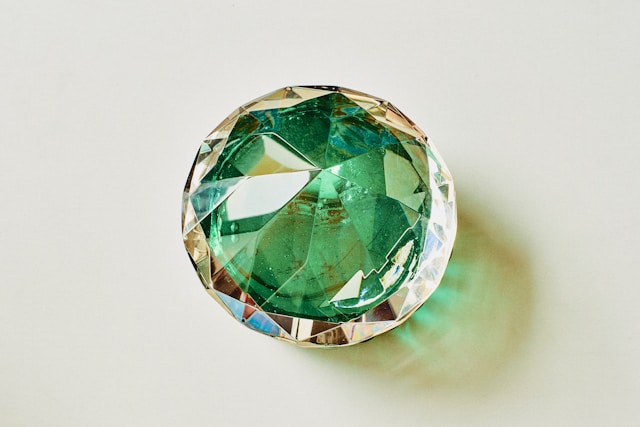
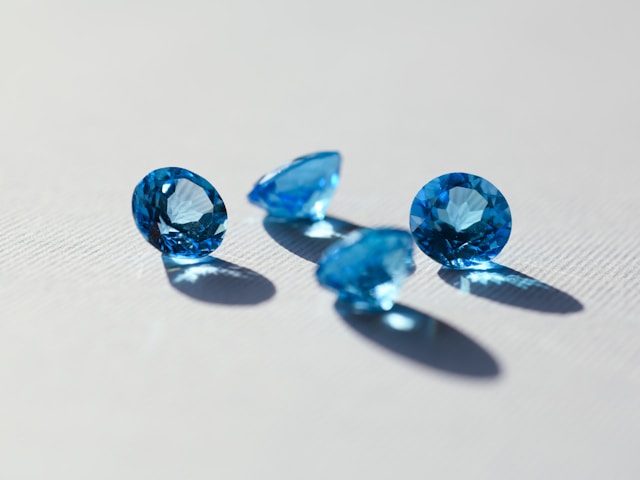
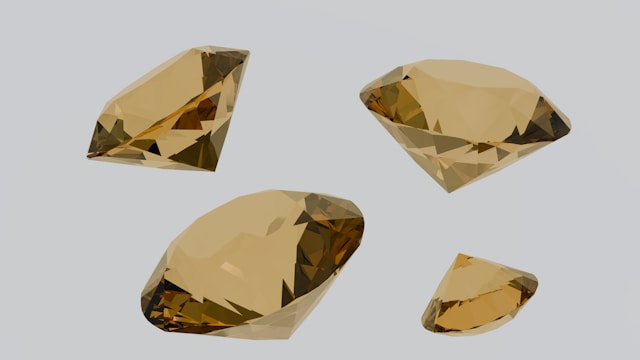
Every diamond we supply for international export is sourced from within Surat’s direct manufacturing ecosystem — polished, graded, and prepared to international standards for US, UK, UAE, and global markets.

Risk Management in Diamond Export Trade
Long-term diamond exporters do not succeed through speculation — they survive through downside risk control. The exporters who sustain profitable businesses are those who understand that a poor purchasing decision costs twice: once at the buying stage, and again when the inventory cannot be moved at the expected price.
The most common risk events in diamond exporting:
- Overpaying during market hype cycles
- Misjudging fluorescence price impact
- Buying poorly cut stones that underperform visually
- Documentation delays causing customs holds
- Inventory stagnation in non-moving categories
- Mismatched certification for target market
- Lab-grown undisclosure legal exposure
- Rapaport price drop on illiquid inventory
Ethical Sourcing & Transparency Commitment
The international diamond trade operates under increasing regulatory and consumer scrutiny. Buyer markets in the US, UK, and Europe expect full disclosure, ethical sourcing documentation, and transparent trade practices from their diamond suppliers. We maintain these standards not as a marketing position but as a fundamental operating requirement.
Who We Work With
Our export diamond supply programme is designed for businesses at multiple stages of their export journey — from established exporters optimising existing supply chains to new ventures building procurement structure from scratch.
A Word From Our Founder

“The exporters who build lasting businesses are not the ones who buy the most diamonds — they are the ones who buy the right diamonds, at the right time, for the right market. Our role is to give you the information, sourcing discipline, and supply structure to make that happen consistently.”
Based in Surat, the world’s diamond polishing capital, Juned and the Zahra Diamonds team work directly within the manufacturing ecosystem to source, grade, and supply certified diamonds to exporters across the US, UK, UAE, and global markets. The focus is always structured supply — not transactional selling.
Why Diamond Exporters Choose Zahra Diamonds — and Stay
We function as a long-term sourcing partner — not a transactional diamond seller. Exporters who have worked with us consistently cite the same reasons they return for repeat supply:
Structured sourcing logic
Every procurement is built around market fit — not available inventory.
Market-aligned pricing
Rapaport benchmarked, cycle-aware, with volume negotiation capability.
Transparent advisory
We tell you when not to buy as readily as when to buy.
Direct manufacturing access
Surat ecosystem sourcing cuts intermediary layers and costs.
Repeat supply capability
Consistent parcel quality across multiple order cycles.
Risk-aware procurement
Downside protection built into every sourcing decision.
Key Terms for Diamond Exporters
Understanding the core terminology of the diamond trade is essential for any exporter engaging with international buyers, customs authorities, and grading laboratories.
- GIA Certification
- Diamond grading report issued by the Gemological Institute of America — the global standard for natural diamond quality assessment, widely recognised by US and international buyers.
- IGI Certification
- International Gemological Institute grading report — the industry standard for CVD lab-grown diamond certification, accepted across all major export markets.
- Kimberley Process (KPCS)
- International certification scheme that ensures natural diamonds are conflict-free. Required documentation for any natural diamond exporter shipping to KP-participating countries.
- Rapaport Price List
- The industry benchmark price grid for polished diamonds, published weekly. Export pricing is typically quoted as a percentage discount or premium to Rap list values.
- CVD Diamond
- Chemical Vapour Deposition — the primary manufacturing method for lab-grown diamonds. CVD diamonds are physically and chemically identical to natural diamonds but created in a laboratory environment.
- Export Parcel
- A matched collection of diamonds assembled for an international buyer, selected for size consistency, colour uniformity, clarity alignment, and calibration to reduce rejection risk.
- Fluorescence
- A diamond’s emission of blue light under UV. Strong fluorescence can affect pricing significantly in some markets — a critical factor in export market alignment.
- HS Code 7102
- The Harmonised System tariff classification code for diamonds. Accurate HS code classification is essential for correct customs duty assessment and export documentation.
Frequently Asked Questions — Diamonds For Exporters
Common questions from diamond exporters and wholesale buyers considering a sourcing partnership with Zahra Diamonds.
Build Your Diamond Export Business on Structure, Not Speculation
The international diamond export industry consistently rewards:
It consistently punishes reactive buying, misaligned certification, and undisciplined inventory management.
If you are serious about building or scaling a profitable global diamond export business — sourcing GIA or IGI certified natural or lab-grown diamonds from Surat — we invite you to initiate a structured consultation.
Confidential Diamond Export Consultation
Target market strategy · Volume & certification planning · Margin protection · Recurring supply structure · Documentation compliance