
India’s Trusted
Natural Diamonds
Supplier
Zahra Diamonds is a professional natural diamonds supplier based in Surat — the city that cuts and polishes over 90% of the world’s diamonds. We supply GIA-certified loose natural diamonds to jewelers, manufacturers, traders, and investors worldwide.
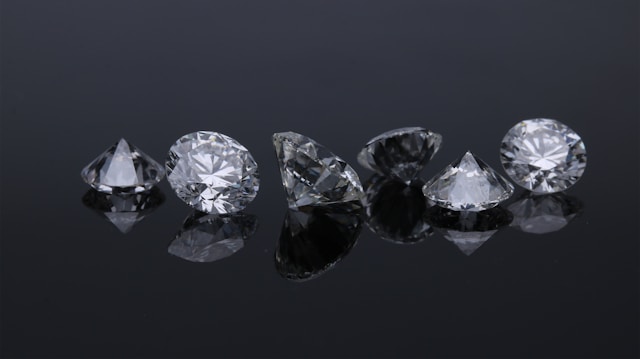
A Natural Diamonds Supplier Built on Precision, Transparency, and Long-Term Relationships
Zahra Diamonds is a specialist natural diamonds supplier operating from Surat, India — the undisputed global capital of diamond cutting and polishing. We source, evaluate, certify, and supply loose natural diamonds to professional buyers worldwide: jewelry manufacturers, retail jewelers, diamond traders, export houses, and serious investment buyers.
We have been active in the diamond trade for over two decades. In that time, we have developed deep sourcing networks within Surat’s production ecosystem, direct relationships with cutting and polishing houses, and a thorough understanding of what professional B2B buyers actually need: consistent quality, verified grading, honest pricing, and guidance from people who know the market — not sales talk.
Our supply covers the full spectrum — from calibrated melee diamonds for high-volume jewelry production, through commercial-grade certified stones for retail jewelers, to high-color, high-clarity GIA-certified diamonds for investment-focused buyers. Whatever your requirement, our process starts with the same discipline: every stone is properly evaluated before it is offered, every price is grounded in current market rates, and every significant stone comes with third-party certification you can rely on.
We work with buyers who value quality, require consistency, and understand that the right supplier relationship is worth more than the cheapest quote on a single transaction.
Ready to discuss your natural diamond requirements?
What Is a Natural Diamond — and Why Does Origin Matter?
A natural diamond is a gemstone formed entirely within the Earth — approximately 100 miles below the surface — over periods ranging from one billion to over three billion years. Under extreme heat and immense pressure, carbon atoms arrange themselves into the crystalline structure that gives diamonds their extraordinary hardness, optical properties, and permanence.
These diamonds are transported to the surface by volcanic activity through formations called kimberlite pipes — then mined, cut, polished, and graded before entering the global market. The process from formation to finished stone spans geological timescales and a complex industrial supply chain.
Why does this matter commercially? Natural diamonds are a genuinely finite resource. New deposits are not being created on any human timescale. Mining volumes are constrained by geology. The supply of high-quality natural diamonds is fixed — and in several key producing regions, production is in long-term decline. This supply constraint is the foundation of the natural diamond’s enduring position in luxury markets and its distinct behavior compared to manufactured alternatives.

Natural diamonds form approximately 100 miles below the Earth’s surface, delivered to minable depths by rare volcanic events involving kimberlite pipes.
Most natural diamonds are between 1 billion and 3.5 billion years old — formed long before complex life existed on Earth. This geological age is scientifically measurable and verifiable.
Diamond is the hardest natural material on Earth, rating 10 on the Mohs scale — uniquely suited to jewelry worn daily and passed across generations.
Global rough diamond production has been declining from peak levels. Major producing mines are in late-stage operation. The natural diamond supply pipeline is not expanding.
Every natural diamond carries internal characteristics — inclusions, growth patterns, crystal form — entirely specific to that individual stone, documented in its grading certificate.
Natural diamonds hold a distinct position in global luxury markets that manufactured alternatives do not share. Their rarity and provenance give them structurally different market behavior.
Natural Diamond Inventory
We supply loose natural diamonds across a comprehensive range of shapes, carat weights, color grades, and clarity grades — regularly updated through our Surat-based sourcing network. Browse what we carry and what we can source on request.
Asscher, Heart, and Trillion cuts available on custom request. Contact us with your specific requirements.
| Grade | Classification | Visual Appearance | Market Application |
|---|---|---|---|
| D | Absolutely Colorless | No color detectable even by expert graders under controlled conditions | Investment-grade, top-tier fine jewelry, clients requiring the absolute best |
| E | Colorless | Negligible color detectable only by experts using master comparison stones | High-end retail, investment buyers, premium fine jewelry |
| F | Colorless | Color detectable only by experts — invisible in any mounted setting | Fine jewelry buyers wanting colorless quality without full D–E premium |
| G | Near Colorless | Noticeable only against higher grades under lab conditions. Effectively colorless in any setting | Most commercially popular grade globally. Best value-to-quality ratio for retail jewelers |
| H | Near Colorless | Slight warmth vs G — invisible when mounted, especially in yellow or rose gold | Strong commercial choice — near-colorless appearance at meaningfully lower per-carat cost |
| I – J | Near Colorless | Slight warmth detectable in larger stones in white metal. Attractive in yellow/rose gold | Commercial manufacturing, high-volume production, price-sensitive retail |
| Fancy Color | Natural Color Diamond | Natural yellows, pinks, blues, greens — graded for hue, tone, and saturation | Collector and investment markets. Rare colors command exceptional premiums. On request. |
| Grade | Definition | Characteristics | Best Application |
|---|---|---|---|
| FL | Flawless | No inclusions or blemishes under 10x. Fewer than 1% of GIA-graded diamonds achieve this. | Investment-grade, collector stones, ultra-premium fine jewelry |
| IF | Internally Flawless | No inclusions; only minor surface blemishes under 10x. Extremely rare. | High-end investment, premium fine jewelry collections |
| VVS1 – VVS2 | Very Very Slightly Included | Inclusions microscopic — invisible even to trained graders without effort | Top-tier retail, high-value solitaires, gift jewelry where exceptional quality matters |
| VS1 – VS2 | Very Slightly Included | Not visible to naked eye. Best combination of eye-cleanliness and price efficiency. | Optimal range for premium retail jewelry across all shapes |
| SI1 – SI2 | Slightly Included | SI1 generally eye-clean in round brilliants. SI2 must be evaluated stone by stone — varies significantly. | Commercial jewelry and value-oriented retail. Individual evaluation essential on SI2. |
We evaluate every SI-grade stone individually before supply. For step-cut shapes (emerald, Asscher), VS clarity or higher is recommended.
Looking for specific shapes, sizes, or grades? We source to specification.
Certified Natural Diamonds You Can Stand Behind
A diamond certificate is the foundation of a professional diamond transaction. It removes subjectivity, establishes an independent record of the stone’s characteristics, and gives every party in the chain — buyer, jeweler, end customer — documentation they can verify and trust.
At Zahra Diamonds, we supply certified natural diamonds graded by the three laboratories that carry the highest credibility in international markets. For any significant stone above 0.50ct intended for retail, trade, or investment, we supply certification as standard — it is not optional, it is part of what we deliver.
The certificate also confirms the stone’s natural origin — an increasingly important distinction as lab-grown diamonds become more prevalent in the supply chain and not always transparently disclosed.
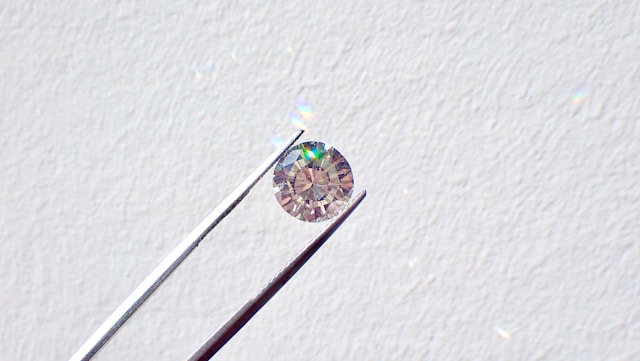
Gemological Institute of America
The global gold standard for diamond grading. GIA invented the 4Cs system and is the most widely recognized laboratory in international markets. The benchmark your buyers, investors, and export partners expect on high-value natural diamonds. GIA reports explicitly confirm natural diamond origin.
International Gemological Institute
One of the world’s largest gemological laboratories, with strong recognition across Asian, European, and Middle Eastern markets. Widely accepted for retail and trade documentation. Particularly prevalent in the Indian and Southeast Asian diamond trade.
HRD Antwerp
Based in Antwerp — historically the world’s diamond trading capital — HRD carries strong recognition in European markets. For diamonds destined for European retail, auction, or export, HRD certification carries significant credibility with trade buyers and sophisticated end consumers.
Overall cut, polish, and symmetry grades
D–Z scale under controlled lab conditions
Clarity grade with plotted inclusion diagram
Exact weight to nearest hundredth of a carat
Precise dimensions in millimeters
Fluorescence strength and color under UV
Table %, depth %, crown and pavilion angles
Confirmed natural (not lab-grown) diamond
Any grading observations specific to the stone
The 4Cs of Natural Diamond Quality
The 4Cs — Cut, Color, Clarity, and Carat — are the internationally standardized framework for evaluating natural diamond quality, developed by GIA and used universally across the global trade. Understanding the 4Cs deeply is what separates professional buyers who make consistently sound sourcing decisions from those who do not.
Cut — The Master of Brilliance
Cut is widely considered the most important of the 4Cs because it has the greatest influence on visual appearance. It does not refer to the shape — it refers to the precision of facet arrangement, proportions, symmetry, and polish. A well-cut diamond directs light efficiently, producing brilliance (white light return), fire (spectral color), and scintillation (sparkle in motion). A poorly cut stone — even at excellent color and clarity — will appear dull and lifeless.
GIA grades round brilliants on a scale from Excellent to Poor. For retail jewelry, Excellent or Very Good cut is recommended. Fancy shapes have no standardized GIA cut grade — light performance must be evaluated individually, which is where expert sourcing guidance becomes especially valuable.
Color — Rarity Measured in Warmth
Diamond color is graded D (absolutely colorless) to Z (light yellow or brown). Grading is done under controlled conditions against master comparison stones — a rigorous process that removes subjectivity. The difference between adjacent grades is extremely subtle and virtually undetectable in a mounted setting, yet the price difference between grades is very real, particularly in larger stones.
G–H stones deliver near-colorless appearance at meaningfully lower per-carat costs than D–F — excellent value for the vast majority of retail jewelry applications. The D–F premium is justified for certified investment purchases, clients who specifically require documented colorlessness, and stones in white metal settings where color contrast is most visible.
Clarity — What Formed Inside the Earth
Clarity refers to the presence, size, position, and nature of internal inclusions and surface blemishes. These form during the diamond’s growth within the Earth — they are literally evidence of billions of years of geological history. Clarity is graded under 10x magnification from FL (Flawless) through IF, VVS, VS, SI, to Included grades.
For most retail jewelry, the key question is eye-cleanliness — not the highest possible grade. VS1–VS2 stones are reliably eye-clean across all shapes. SI1 in round brilliants is generally eye-clean but must be evaluated stone by stone. SI2 varies significantly and requires individual assessment. For step-cut shapes like emerald and Asscher, we recommend VS or higher — their cut style makes inclusions far more visible.
Carat — Weight, Rarity, and Price Escalation
One carat equals exactly 0.200 grams. Larger diamonds at any given quality grade are significantly rarer — and this rarity is reflected in an exponential price-per-carat relationship that every professional buyer must understand. A 2ct diamond is not twice the price of a 1ct at the same quality — it is often three to five times more per carat, because the 2ct rough required is far rarer than two 1ct roughs.
Stones just below key weight thresholds (0.90ct vs 1.00ct, 1.90ct vs 2.00ct) offer meaningful savings with almost no visible difference in face-up size — a strategy experienced jewelers use to provide excellent client value without visual compromise. We advise on these decisions as standard.
Natural Diamonds vs. Lab-Grown Diamonds
The rise of lab-grown diamonds has fundamentally changed the diamond market. For professional buyers and jewelers, understanding this distinction is not a matter of preference — it is a commercial necessity. These are structurally different products with different supply dynamics, different market behaviors, and meaningfully different long-term price trajectories.
Lab-grown diamonds are chemically and optically identical to natural diamonds — they pass standard testers and are graded by the same labs. But their fundamental supply characteristic is different: they can be manufactured at industrial scale. As production capacity has expanded globally, lab-grown prices have fallen sharply — a trend that shows no sign of reversing.
Natural diamonds cannot be mass-produced. Their supply is constrained by geology, mining economics, and the finite lifespan of producing mines. The supply pipeline for high-quality natural diamonds is not expanding — in several major producing regions, it is actively contracting.
This supply constraint is the core commercial argument for natural diamonds in professional and investment markets. It does not guarantee price appreciation — but it means natural diamonds are not subject to the commodity-style price compression that lab-grown diamonds experience as production scales globally.
| Factor | Natural Diamond | Lab-Grown Diamond |
|---|---|---|
| Origin | Formed within the Earth over 1–3.5 billion years. Natural origin confirmed on certificate. | Created in a laboratory using HPHT or CVD processes in weeks. No geological provenance. |
| Supply | Finite — constrained by geology and fixed mine deposits. Cannot be reproduced. | Scalable — limited only by manufacturing capacity and energy cost. On-demand production. |
| Rarity | Genuinely rare, especially at higher quality grades and larger sizes. Fixed by what exists in the Earth. | Not inherently rare — producible at any grade to meet demand. Rarity is not applicable to lab-grown supply. |
| Price Trajectory | Historically stable in luxury markets. Supply constraints provide a floor that manufactured alternatives cannot undercut. | Significant price decline as production scales. Lab-grown prices have fallen sharply across all categories since 2018. |
| Certification | GIA, IGI, HRD — certificate states “natural diamond” and confirms geological origin. | GIA, IGI, HRD — certificate states “laboratory-grown.” Cannot be presented as natural with proper certification. |
| Resale Value | Secondary market exists for certified quality stones. Value holds better over time due to supply constraints. | Resale market significantly weaker — buyers can always purchase new stones at declining prices. |
| Heritage | Geological history of billions of years. Centuries of cultural significance in fine jewelry and gifting. | Created in a controlled industrial environment. No geological or cultural heritage. |
| Market Position | Luxury market, investment-grade, heritage fine jewelry, collectors. | Accessible price point, fashion jewelry, volume markets, price-conscious consumers. |
Natural Diamond Supply for Every Professional Buyer
Our B2B supply model is built around the specific requirements of professional diamond buyers. Different buyers operate with different priorities — and we structure our supply, documentation, and service to match what each type of buyer actually needs.
Jewelry Manufacturers & Production Houses
Supply consistency, calibration accuracy, and quality-grade matching across large parcels are non-negotiable for production. A manufacturing line cannot function with inconsistent stone sizes or color grades that vary batch to batch. We understand this and build supply around it.
Our Surat-based network gives direct access to calibrated production-grade inventory with competitive wholesale pricing and reliable repeat availability. We maintain supply continuity across extended programs and communicate proactively when market conditions affect pricing or availability.
- Calibrated melee in consistent parcels by size, color, and clarity
- Round and fancy shape calibrated stones for setting lines
- Matched pairs for studs, drops, and two-stone designs
- Layout sets for full jewelry collection production
- Repeat order availability with consistent grading standards
- Competitive wholesale pricing on volume supply
Retail Jewelers
In an increasingly informed consumer market — where buyers arrive knowing the 4Cs, having compared prices online, and often aware of lab-grown alternatives — the quality and certification of the stones you sell directly affects your reputation and your margins.
We supply retail jewelers with certified loose natural diamonds across all major shapes, carat weights, and quality grades with GIA, IGI, or HRD documentation as standard on significant stones. Diamonds that are genuinely eye-clean, properly graded, and honestly priced.
- GIA, IGI, and HRD-certified loose diamonds across all shapes
- 0.30ct through 3.00ct+ across commercial to premium grades
- Eye-clean SI and VS grades individually evaluated before supply
- Custom sourcing for specific client orders and bespoke designs
- Transparent pricing with accurate grading representation
Diamond Traders & Export Houses
For traders operating across multiple markets, pricing transparency and documentation integrity are everything. You are buying to sell — often quickly — and your margins depend entirely on the accuracy of what you receive versus what you were told.
We work with traders who understand what they are buying and why it is priced as it is. We do not obscure quality characteristics or inflate descriptions. Trading relationships depend entirely on trust, and ours are built on exactly that.
- Wholesale pricing on parcels and individual certified stones
- Full grading documentation on all significant stones
- Transparent, accurate quality representation throughout
- Conflict-free sourcing with Kimberley Process compliance
- International shipping with full insurance and documentation
Investment Buyers & Private Collectors
Natural diamonds can be considered as long-term value preservation assets by buyers with realistic expectations and disciplined selection criteria. We distinguish clearly between genuine market guidance and speculation — and will give honest counsel even when that means advising against a purchase.
Investment-oriented buyers typically focus on where supply is most genuinely constrained: large stones in high color and clarity grades, rare fancy colors, and GIA-certified diamonds where the quality premium is most defensible over time.
- GIA-certified D–H color, VS–FL clarity at significant carat weights
- Rare fancy color natural diamonds when available
- Honest, non-speculative market guidance on selection and timing
- Discreet, professional private collection sourcing
- Documentation support for insurance and valuation purposes
Natural Diamonds as Long-Term Value Assets
The question of whether natural diamonds are a sound long-term investment is one we take seriously — and answer carefully. Diamonds are not liquid assets. They do not trade on a public exchange. Their secondary market requires effort and specialist knowledge to access effectively. Anyone who tells you otherwise is not giving you honest advice.
What is true is that high-quality, GIA-certified natural diamonds in the right size, color, and clarity ranges have historically preserved value in ways most manufactured goods do not. Their supply is genuinely constrained in a way no factory investment can change. The luxury market’s appetite for exceptional natural stones shows no structural signs of weakening globally.
The practical reality is that most diamond purchases do not meet the investment-grade threshold. Commercial-grade SI stones and production melee are supply chain components, not investment assets. The investment case applies specifically and selectively to certified, high-quality, significant-weight natural diamonds in the upper quality tier.
Our role is to help you identify which diamonds meet that threshold and why — and to tell you honestly when they do not. We will tell you when a stone is overpriced for its grade. We will tell you when your investment thesis does not hold up under market scrutiny.
“We provide the most accurate market knowledge we have, are explicit about uncertainty where it exists, and never encourage a purchase we would not be comfortable justifying to you five years later.”
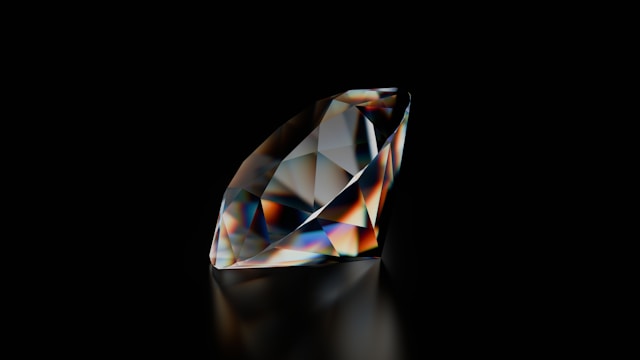
Investment Selection Criteria
Our Natural Diamond Sourcing Process
The journey from rough diamond to certified polished stone involves multiple stages, each affecting quality, integrity, and value. Understanding this process helps buyers see where value is created — and where it can be lost if any stage is handled carelessly.
Rough Sourcing
We source rough diamonds through established Kimberley Process-compliant channels. Provenance integrity at the rough stage is the foundation of everything — it cannot be corrected later in the supply chain.
Planning & Sawing
Rough diamonds are assessed by planning specialists using 3D scanning technology to determine the optimal cut for maximum polished stone value.
Cutting & Polishing
Carried out in Surat by skilled craftsmen with decades of experience. Cut quality — which directly determines visual performance and market value — is determined entirely at this stage.
Quality Evaluation
Every polished stone passes our internal quality evaluation. Stones that do not meet our standards are not offered to buyers — regardless of what the lab certificate says about grade.
Certification & Delivery
Significant stones are submitted to GIA, IGI, or HRD for independent grading, then professionally packaged and shipped worldwide with full documentation, insurance, and tracking.
Kimberley Process Compliant
Conflict-Free Sourcing & the Kimberley Process
All diamonds supplied through Zahra Diamonds follow conflict-free sourcing practices in full compliance with the Kimberley Process Certification Scheme (KPCS) — the international framework established in 2003 to prevent rough diamonds used to finance armed conflict from entering the legitimate trade. We source exclusively through KPCS-compliant channels and can provide full Kimberley Process documentation for buyers who require it for import, export, or compliance purposes.
Why Professional Buyers Choose Zahra Diamonds
The diamond supply market has no shortage of suppliers. What it has a shortage of is suppliers who operate with genuine transparency, accurate quality representation, and long-term commitment to the buyer’s commercial interests. This is the standard we hold ourselves to.
Surat at the Core
Surat processes over 90% of the world’s polished diamonds. Being based here gives us unmediated access to the world’s largest diamond manufacturing ecosystem — direct sourcing, cutting houses, and inventory depth that buyers in other markets cannot match. This translates into better pricing and broader availability.
Two Decades of Expertise
Twenty years in the diamond trade means sourcing through multiple market cycles, distinguishing properly graded stones from overstated ones, and knowing which parts of the market offer genuine value. This expertise protects our clients from costly purchasing mistakes.
Independent Certification
We supply GIA, IGI, and HRD-certified natural diamonds as standard on significant stones. We do not ask buyers to trust our word on quality — we provide independent documentation that can be verified by any party in the transaction.
Honest Pricing
Our pricing reflects current market rates with transparent explanations of what drives value in each stone. No inflated descriptions, no unexplained premiums, no pressure sales. What the diamond is worth at current market conditions — nothing more, nothing less.
Custom Sourcing
When you need a specific stone not in current inventory, we source it. Submit your specification — shape, carat, color, clarity, certification, budget — and our network access allows us to locate matching stones efficiently with honest market guidance.
Global B2B Supply
We supply professional buyers in the USA, UK, UAE, Hong Kong, Europe, and India. International shipments use established diamond logistics channels with secure packaging, full insurance, and comprehensive export documentation.

Over 20 Years in the Heart of Surat’s Diamond Trade
I started Zahra Diamonds with one conviction: that the diamond business works best when buyers can trust their supplier completely. Not just on quality — but on pricing, on grading accuracy, on what a stone is genuinely worth versus what it is being sold for.
Over twenty years of working within Surat’s diamond ecosystem has given me access to production networks, cutting house relationships, and market knowledge that most buyers outside India simply cannot reach directly. Our position here — at the center of global diamond manufacturing — is not incidental to what we do. It is the foundation of how we serve our clients better than suppliers operating further from the source.
Every diamond we supply has been evaluated with the same standard: would I be comfortable if this client knew everything I know about this stone? If the answer is yes, the stone goes forward. If it is not, it does not — regardless of the margin.
That standard is what has built our long-term client relationships. And it is the only standard we intend to work to.
Why Surat Matters for Natural Diamond Supply
Surat’s dominance in the global diamond industry is not an accident. It is the result of generations of accumulated expertise, infrastructure investment, and ecosystem development that has made the city structurally irreplaceable in the global diamond supply chain.
Every significant rough diamond production source in the world — from Russia’s ALROSA to De Beers’ operations in Botswana, Namibia, and Canada — routes stones through Surat for cutting and polishing before they reach global markets. The city is home to over a million diamond industry workers, thousands of cutting and polishing units, and a dense network of trading companies and grading facilities.
For a natural diamonds supplier based in Surat, this means direct access to stones at the production source — before multiple layers of international intermediaries add cost without adding value. Real-time awareness of market supply and pricing that suppliers outside the city cannot match. And relationships with cutting houses that can execute specific requirements efficiently.
When you source natural diamonds through Zahra Diamonds, you source from within the operational heart of the global diamond supply chain — and that geographic advantage is built into every price we offer.
Frequently Asked Questions
Questions we receive regularly from jewelers, traders, manufacturers, and investment buyers evaluating natural diamond supply options.
Request Natural Diamond Inventory from Zahra Diamonds
Whether you need consistent wholesale supply, a specific GIA-certified stone, or custom sourcing guidance — our team is available to assist serious professional buyers. Tell us what you need.